

Contents

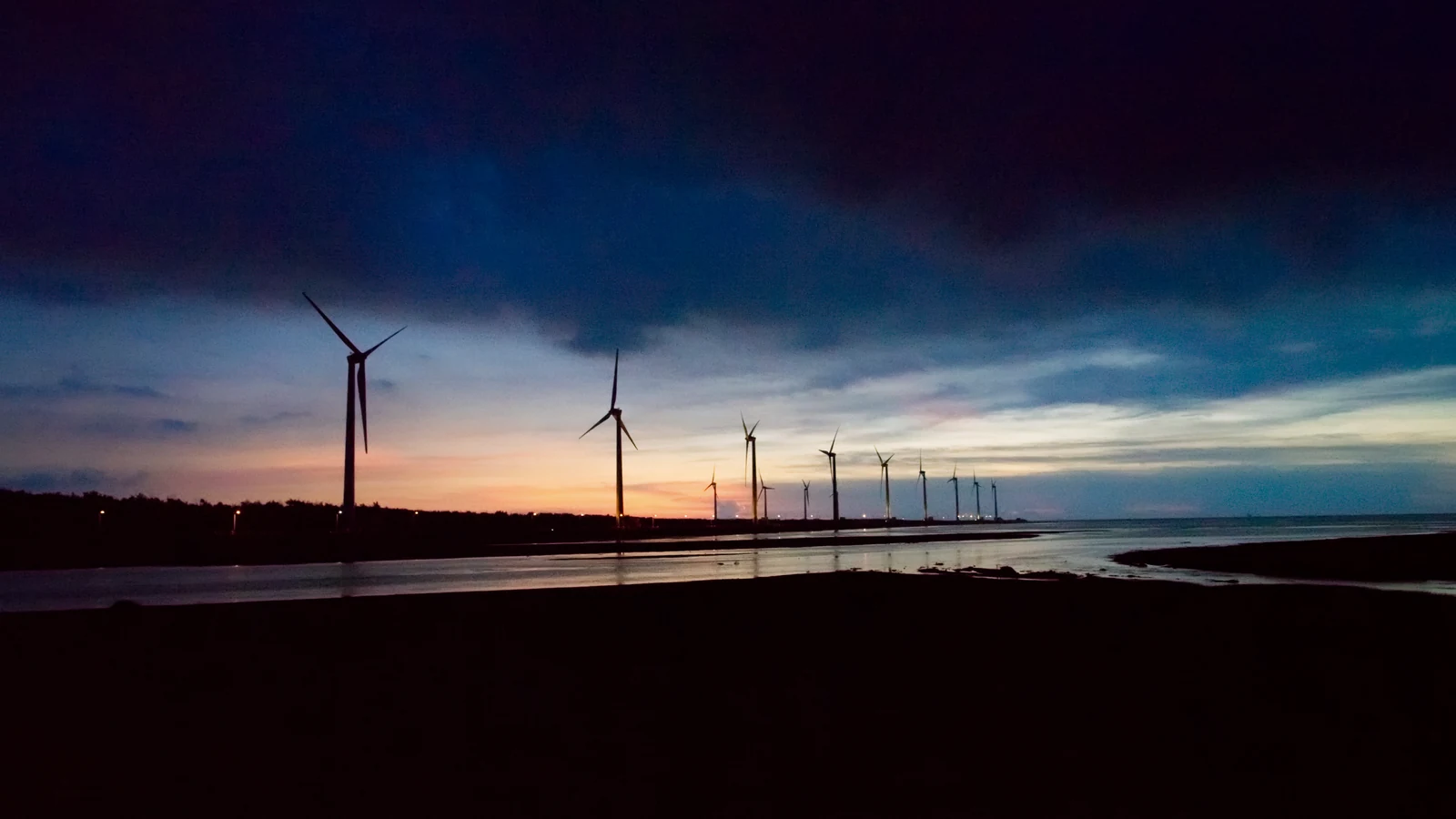
Plan Gaomei in this order: confirm access, match the tide window, then fit in sunset. A boardwalk and wildlife visit needs a different schedule from a shore-based sunset stop. Make the wetlands the focus of a coastal half day, allowing roughly 1.5–2 hours on site plus travel from and back to central Taichung. Arriving ten minutes before sunset leaves little room for the walk, crowds or a change of viewpoint.
| Goal | First check | Trade-off |
|---|---|---|
| Walk the boardwalk | Access calendar and works | Reschedule during closure; never bypass |
| Observe wildlife | Permitted time, light and wind | Quiet observation without collecting |
| Watch sunset | Sunset and clearing time | Arrive at least an hour earlier |
| Photograph reflections | Water, wind and light | No guarantee; keep other compositions |
What to see beyond the sunset
Gaomei is an intertidal landscape rather than a lake with an unchanging water level. Mud, shallow water and vegetation appear in different proportions as the tide moves. The same viewpoint can look quite different at another time of day. Treating the place as a changing natural environment is more rewarding than trying to reproduce one online photograph exactly.
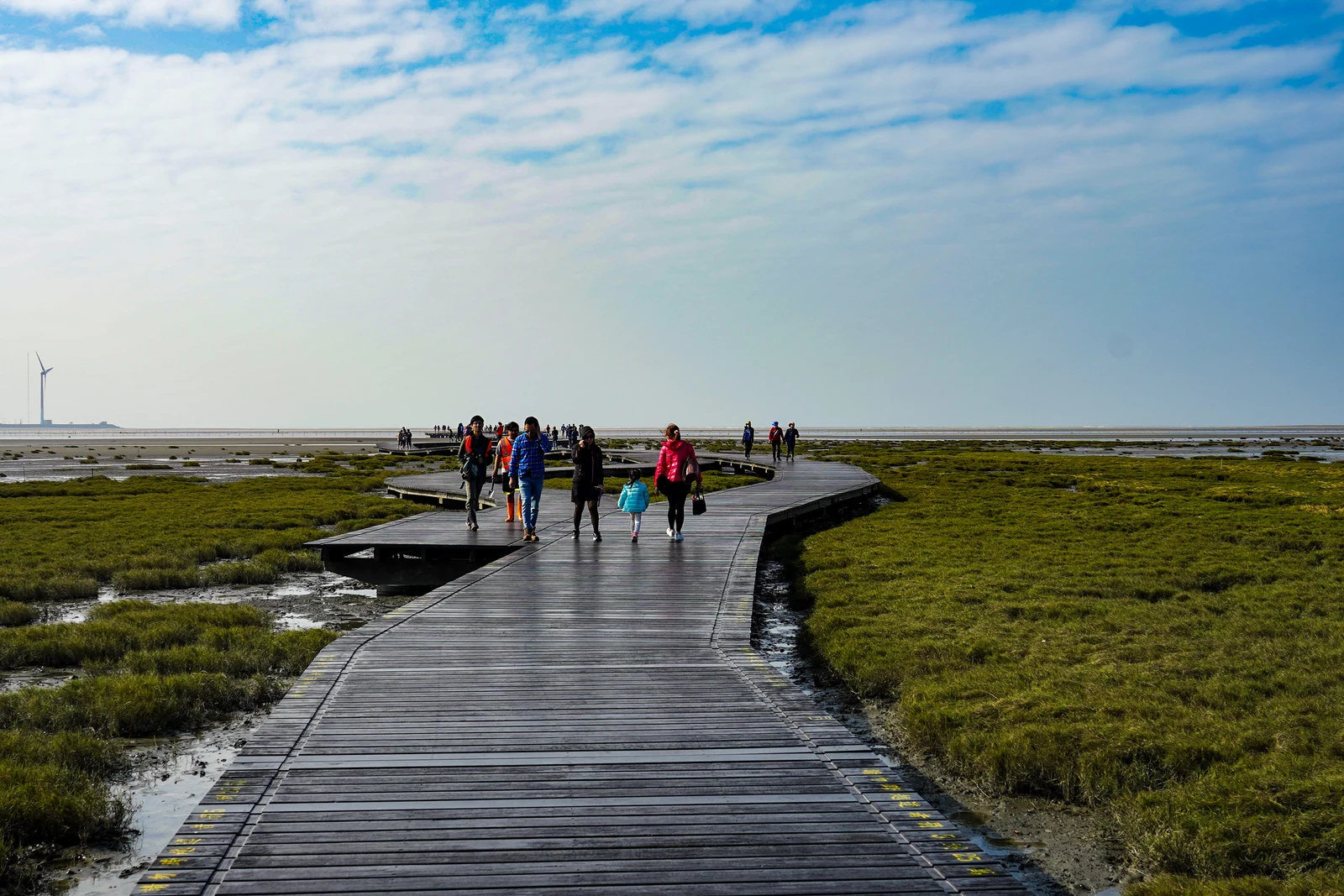
When open, the boardwalk lets visitors observe the wetlands while reducing trampling. Look for small holes in the mud, fiddler-crab activity and mudskippers, and compare vegetated patches with more open ground. Wildlife does not appear on command. Quiet observation is more useful than chasing a subject, and not seeing a particular species does not make the outing unsuccessful.
Autumn and winter can be rewarding for waterbirds, though birdwatching and sunset portraits work better as separate priorities. Bring binoculars, stay in permitted areas and give birds space. Do not feed them or make noise to trigger a flight photograph. Photograph the wind turbines and coastal panorama, then spend some time simply observing.
Licence & attribution
Boardwalk hours, tides and sunset are different clocks
The boardwalk does not have an identical usable window every day. The authority normally restricts access for 1.5 hours before and after ordinary high tide, two hours before and after spring high tide, and after sunset; sea conditions, weather and works can further change access. Use the current official opening table rather than an old screenshot or a calculation based on one tide reading.
High tide is the moment of peak predicted water level, not the moment the water starts rising. Low tide is likewise a point in the cycle rather than the entire ebb period. For visitors, the practical task is to fit the outward and return walk inside the permitted window. If wardens start clearing the area, leave promptly even if an app suggests time remains.
For sunset, work backward from the date-specific sunset time and aim to arrive at least an hour earlier, with more time for families, photography or busy days. If the boardwalk window does not overlap sunset, choose a permitted shore viewpoint or another date. A transport or tour booking does not provide permission to stay inside a closed area.
Reflections are a possibility, not a guarantee
A mirror-like reflection needs shallow water, a sufficiently calm surface and suitable light. Low tide alone does not guarantee it, nor does sunshine guarantee light wind. Prioritize a safe visit; if you have only one available day, make the coastline, wetland textures and turbines your main subjects. A reflection is a bonus, never a reason to enter restricted mudflats or move farther offshore.
For portraits, choose secure footing before adjusting the camera height and framing. Place a person to one side and balance the sky and water in the frame rather than asking them to keep stepping backward. Secure hats, lens caps and bags in the wind. Ask staff for help with anything dropped into a protected area instead of climbing over barriers, and leave lightweight props at home.
A manageable route when access is open
Before entering, deal with toilets, water and your return meeting point. The visitor center, parking areas, bus stops and boardwalk entrance are different locations. Agree on a clear landmark in case the group becomes separated. Taking care of essentials first avoids an unnecessary return walk against the flow of visitors.
Once on the boardwalk, maintain enough time and energy to return comfortably; reaching the end is optional. Step aside appropriately for photographs without blocking the path. Any access to the permitted sustainable-use experience area must follow the designated route and opening instructions. Do not climb down the sides or explore beneath the boardwalk, and do not treat the area near the northern sand-control embankment as a swimming spot.
Back on shore, decide whether conditions suit a further short coastal stop. Clean muddy footwear and hands before boarding transport, and carry rubbish away. On a boardwalk-closure day, limit the visit to permitted viewpoints or choose an indoor city activity. Having already traveled there is not a reason to search for an unguarded way in.
Licence & attribution
Families, strollers and older travelers
Coastal comfort depends on wind as well as the city temperature. A light windproof layer, secure hat, drinking water and sun protection are useful. Explain to children that they must not catch crabs, dig up burrows or feed birds. An observation game, such as finding three different animal movements, can be more engaging than making distance the goal.
Stroller and wheelchair users should check the surface, gradients and restrictions between their actual drop-off point and destination. A boardwalk does not make the entire journey accessible. Strong wind, congestion or slippery conditions may make a shore-based stop with arranged pickup a better option. Shorten the visit if someone needs frequent rests, and do not assume a car will be immediately available at dusk.
Respect the wildlife refuge
Gaomei is zoned into core, buffer and sustainable-use areas. Signs and current notices determine where visitors may go. Someone standing among the vegetation does not make that spot legal to enter, and the mud beside the boardwalk is not an unrestricted activity area. Observe from permitted locations with your eyes, binoculars or camera so wildlife can continue its normal behavior.
Do not feed wildlife, collect animals or plants, dig into the mud or remove shellfish. Drone operation in the refuge requires approval. These restrictions protect habitat and reduce disturbance; they apply even when no warden is immediately visible. Professional filming or research needs should be discussed with the managing authority before arrival.
Building a realistic half-day plan
For a wildlife-focused visit, choose an open boardwalk window, observe the intertidal habitat, then return to shore and continue to a meal elsewhere on the coast. For sunset, finish lunch and other stops earlier and arrive with spare time for parking, walking and choosing a viewpoint. In either case, settle your departure plan before the sky starts darkening.
If visiting Taichung’s science museum in the morning and Gaomei later, allow a genuine meal and transfer gap between them. Leaving a city attraction at its closing time is too late to improvise a coastal sunset plan. Keep an indoor or city-walking alternative for wetland closures or strong wind, while checking that alternative’s own opening days and restrictions.
Your base affects how tiring the return feels. Use the Taichung accommodation-area guide if city dining and onward travel are priorities. If catching a high-speed train that evening, shorten the wetland stay or arrange a clearly timed return. Do not connect an optimistic driving estimate directly to a departure you cannot miss.
Transport, transfers and tours
The relationship between your bus stop, the boardwalk entrance and shore viewpoints determines the final walking distance. See Taichung to Gaomei transport for the journey and return options, and the Taichung transport guide for city travel. Taichung HSR Station and conventional Taichung Railway Station are different meeting points.
A half-day tour or transfer can reduce waiting, but check the selected date, meeting point, language, visit duration and cancellation rules. During works, confirm the alternative stop before buying. A product labeled “sunset” or “sky mirror” cannot guarantee weather, reflections or boardwalk entry. Treat paid guiding, parking, food and any separately ticketed visitor-center experiences as distinct services.
Frequently asked questions
Is the boardwalk closed in October 2026?
Yes, annual maintenance is announced for October 12–23, including the entrance section. Recheck the reopening notice.
Does that close the entire wetlands?
The works concern the boardwalk and surrounding facilities. Follow local restrictions at shore viewpoints and never bypass the entrance over the mud.
What is the best arrival time?
Match the official access window to your wildlife or sunset priority. Aim to arrive at least an hour before sunset if that is your goal.
Does low tide guarantee access?
No. Works, weather, sea conditions and staff instructions can still close access.
Can I stay on the boardwalk after sunset?
Do not plan to remain in the refuge after sunset; follow wardens’ clearing instructions.
Are mirror reflections guaranteed?
No. Water depth, wind and light must align. Never enter restricted areas to seek a reflection.
May I catch crabs or feed birds?
No. Observe at a distance without collecting wildlife, digging burrows or feeding animals.
Can I fly a drone?
Not without approval for operation inside the refuge. Ask the managing authority in advance.
Is it suitable for strollers or wheelchairs?
Check the actual approach, wind and access status. A shorter shore visit with arranged transport may suit some groups better.
Does booking a tour guarantee boardwalk entry?
No. Tours must follow tide and works restrictions too; check their alternative plan.