
Contents

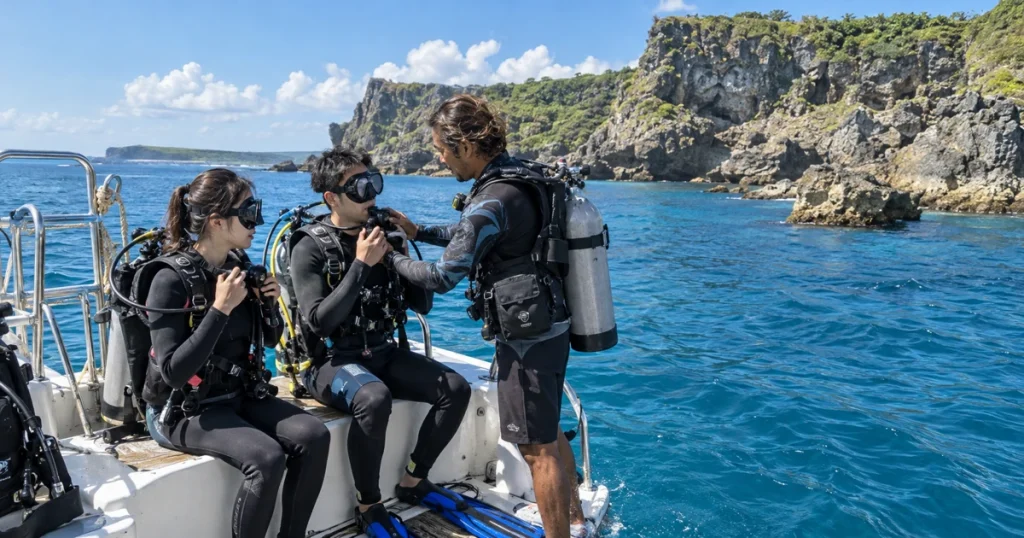
For your first scuba experience in Kenting, look for an introductory dive explicitly accepting guests without a certification, often called Discover Scuba Diving. Compare instructor ratios, health requirements, meeting-point transport and cancellation rules before the photographs. Becoming comfortable with the briefing and water practice matters more than reaching a particular depth. Operators work around Wanlitong and Houbihu, but the actual site must fit permitted activity zones and the day’s conditions.
An introductory experience suits travelers who want to try breathing underwater before committing to a qualification. It requires instruction and appropriate supervision throughout; completing it does not qualify you to dive independently. If you have a flight afterward, build the post-dive waiting period into your itinerary before choosing the diving day rather than discovering a conflict after payment.
Introductory scuba, snorkeling or a certified fun dive?
A search for Kenting diving often returns one page selling snorkeling, introductory scuba, fun dives and Open Water courses. Snorkeling is mainly surface observation. An introductory scuba experience uses tank equipment under an instructor. A fun dive normally requires the relevant existing qualification. Open Water is a full entry-level certification course with different training, time and budget requirements.
Tell the operator clearly that you are not certified and describe your previous water experience honestly. Do not mistake a lower-priced guided shore dive for a beginner package. “Shore” and “boat” describe how you reach the site, not whether an uncertified guest is eligible. The product must explain both the access method and participant requirements.
A souvenir certificate or participation record is different from a formal scuba qualification. PADI’s comparison of Discover Scuba Diving and Open Water explains the distinction. If you enjoy your first session, ask how further training would work; one successful experience is not a basis for renting tanks and diving on your own.
Wanlitong and Houbihu: location matters alongside the operator
Wanlitong for a west-coast half day
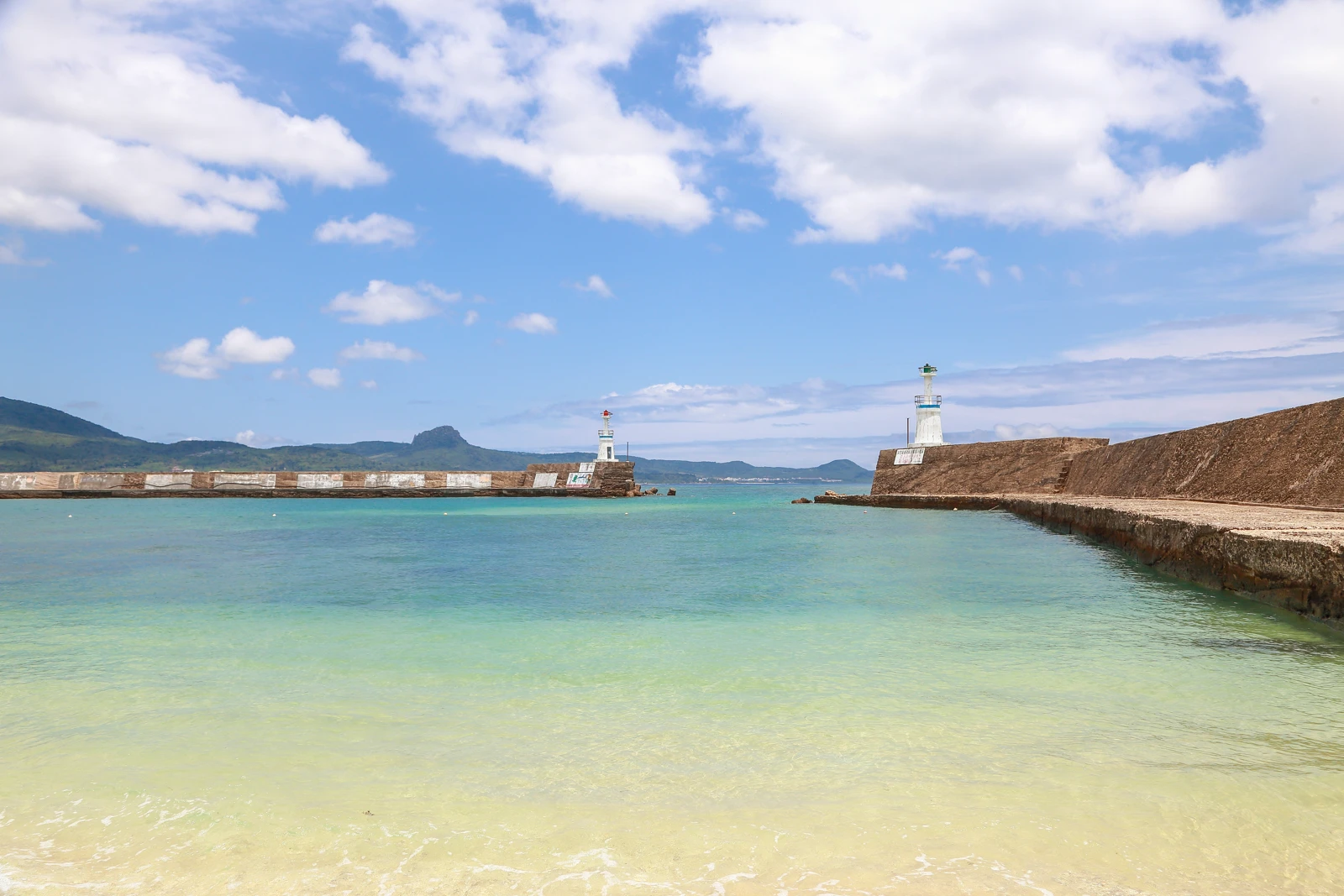
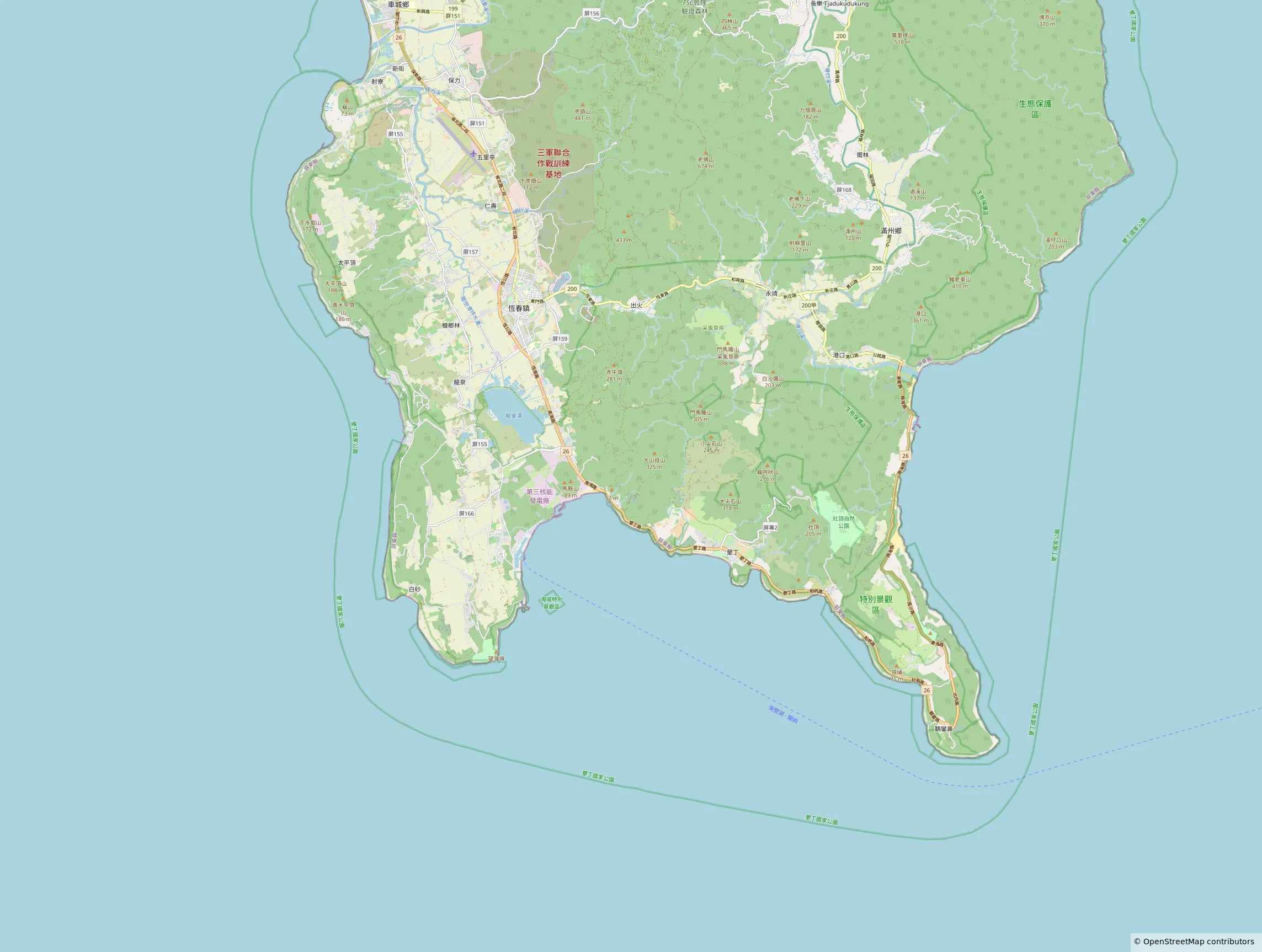
Wanlitong is west of Hengchun, with businesses offering snorkeling, scuba and SUP around the bay. Choosing it can keep the rest of your day on the west coast and reduce cross-peninsula travel. A calm-looking shoreline does not make every entry point appropriate. Reef terrain, waves and protected-area boundaries need to be handled by an operator familiar with the area and its rules; you do not need to prescribe your own fixed underwater route.
Use a full street address when arranging arrival. Haibian Water Sports is at No. 16-1, Wanli Road in Shanhai Village, and is different from other businesses with Wanlitong in their names. Registration and equipment preparation generally happen at the shop, so the bay’s general map pin is not an adequate meeting address. Drivers should also ask where to park before arriving at the narrow coastal streets.
Houbihu: establish whether you are booking shore or boat access
Houbihu is a commonly used activity-area name, and several dive shops are based along nearby Daguang Road. Some sell both shore and boat experiences, meeting at the shop before moving onward rather than asking you to find a vessel at the pier. For a boat trip, ask about boarding, the boat journey and seasickness considerations. For a shore trip, ask about walking distance and moving while equipped. Your own mobility and the exact package matter more than a blanket claim that one method is always easier.
If a companion will not dive, check whether they can wait at the shop, accompany you to the shore or join the boat, and whether there is a separate fee. Treating the session like an ordinary sightseeing stop can leave them with no practical place to go. It can be simpler to choose a conveniently reached operator from your Hengchun, Nanwan or Daguang base and let the instructor select a suitable permitted site.
Introductory scuba prices and inclusions in 2026
Use the following per-person examples in New Taiwan dollars to plan your budget. They are budget references rather than date-specific quotations or lowest-price guarantees. Accommodation, boat charges, photography and a one-to-one arrangement can change the total. Compare the same activity with the same instructor ratio instead of the smallest number in a search result.
| Operator and published option | Price | What to notice |
|---|---|---|
| Taiwan Dive Center, introductory shore dive | NT$2,500 per person | Includes full scuba equipment and activity insurance; about 2.5–3 hours overall, with roughly 30–40 minutes underwater; its direct page lists 1:2 instruction |
| Nanyung Diving Center, introductory scuba | NT$2,500 per person | Includes washing facilities and drinking water; confirm instructor ratio, the full equipment list and photography |
Compare Taiwan Dive Center’s introductory experience and Nanyung’s services. Taiwan Dive Center also advertises NT$300 off when booking seven days ahead; confirm the conditions and date with the operator. Check whether an offer is a simple discount, an accommodation bundle or an arrangement limited to a particular sales channel.
Ask what “insurance included” covers: the policy type, insured people, scope and exclusions. Operator public liability, general travel insurance and personal diving-accident cover are not interchangeable. This lets you decide whether to arrange additional protection. For photography, confirm whether you receive still images or video, whether there is an extra charge and how files are delivered. Advertising images are not a promise that every participant will get identical results.
How to select the correct Klook option
The Taiwan Dive Center Klook product contains several activities. Select a shore or boat option explicitly described as introductory scuba without a certification requirement. Marketplace options and the direct website may have different instructor ratios: a direct-page 1:2 arrangement and a platform 1:1 option are not universal terms for every booking. Its low displayed starting price may belong to snorkeling rather than scuba.
The Wanlitong Haibian Water Sports product offers both uncertified introductory scuba and advanced snorkeling. It lists ages ten and above, a maximum 1:2 ratio, underwater photography and hot showers. Open the actual scuba package details before paying and check the date, participant count and cancellation terms.
Meeting points and transport: leave room before the dive
| Operator | Published address in Hengchun, Pingtung | Planning point |
|---|---|---|
| Taiwan Dive Center | No. 55-60, Daguang Road / 大光路55-60號 | The former property has moved; use this current address |
| Haibian Water Sports, Wanlitong | No. 16-1, Wanli Road, Shanhai Village / 山海里萬里路16-1號 | Confirm parking, the reporting entrance and the ride back |
| Nanyung Diving Center | No. 79-56, Daguang Road, Daguang Village / 大光里大光路79-56號 | Follow your order’s shop meeting instructions or other confirmed arrangements |
The 9189 Kenting Express from Kaohsiung can take you to Hengchun, where the final connection to the dive shop still needs planning. Avoid placing your first-dive reporting time immediately after a long bus journey: traffic, finding the entrance, forms and changing all need room. Staying on the peninsula the night before an early session also makes it easier to arrive rested. Our Kaohsiung to Kenting transport guide covers the long-distance journey.
If you are not driving, first ask whether the operator offers pickup, from which stop and at what price, then decide where to leave the bus. For Wanlitong, check route 307; for the Houbihu direction, compare route 102. Consider the timetable and the remaining distance to the shop together. A destination appearing on a route is not proof that an early reporting time or afternoon return will connect. Our Kenting local transport guide helps distinguish the routes.
For a reserved taxi home, add equipment removal, washing, packing and photo delivery to the underwater portion. A weather-driven site change may also alter the finishing location. Agree a pickup window with some margin and keep a way to contact the driver. A waiting car should never become pressure to rush an instructor’s safety briefing.
Licence & attribution
What happens during a first scuba experience?
A typical session starts with registration and health paperwork, then an introduction to equipment, communication signals and safety requirements. Changing and practice in a suitable environment follow before the instructor decides whether you can proceed with the rest of the experience. Operators and conditions can change the order or duration. Confirm that instruction will be in a language you understand; English-speaking reception staff are not the same as an English-speaking instructor assigned to your session.
The underwater experience is not an examination that you must finish. Tell the instructor immediately if you are frightened, uncomfortable with equipment or experiencing ear discomfort, so they can assist or end the activity. Do not push yourself to reach an advertised depth. Depth and duration are limits and planning decisions based on training, sea conditions and your response, not targets the guest has to achieve.
Essential skills must be taught and checked by a qualified instructor in person, rather than practiced from an online article. PADI’s safety guidance includes breathing normally and continuously while scuba diving, without holding your breath. Follow the instructor’s directions, stay close and do not change depth or chase wildlife independently. Taking fewer photographs is acceptable; overlooking discomfort or communication is not.
Age, swimming ability and health screening
The minimum age for PADI Discover Scuba Diving is ten, but that does not oblige every Kenting business or every sea condition to accommodate a ten-year-old. Operators may apply stricter requirements based on equipment fit, their arrangements and participant assessment. Parents should give the child’s real age and ask about accompanying adults and signatures. Appearance, height or someone else’s previous booking is not a substitute for confirmation.
Some introductory products accept non-swimmers, but the instructor still needs to assess adaptation to the equipment and water environment. Describe your comfort around water, whether you can put your face in and any previous difficulty. If your real goal is simply to observe fish comfortably, an appropriate surface-snorkeling trip is a reasonable choice. There is no need to scuba dive solely because your companions have booked it.
Read PADI’s current medical questionnaire and forms in advance, and obtain a physician’s assessment when directed by the questionnaire or required by the operator. A travel article cannot determine whether a health condition or prescription medication is compatible with diving. Do not stop medication or conceal your medical history to meet a booking condition. The current PADI questionnaire says not to dive if you are pregnant or trying to become pregnant. If pregnancy is possible, clarify this before entering the water. Postpone when ill; instructor supervision is not medical clearance.
Get sufficient sleep and avoid entering the water after drinking or while hungover. Tell the operator before the activity if you have a cold, congestion, ear pain or feel unwell, and postpone when necessary. Flexibility is useful on a dive trip. Participation should depend on your actual condition and professional assessment, not the amount already paid or the number of holiday days remaining.
Flying after diving: reserve the waiting period first
DAN’s flying-after-diving recommendations give a minimum 12-hour surface interval after a single no-decompression dive and a minimum 18 hours after multiple dives in a day or diving over multiple days. These recommendations apply to recreational air divers without symptoms of decompression sickness, for aircraft cabin altitudes of about 2,000–8,000 feet. They reduce risk rather than guaranteeing its absence, and a longer interval reduces risk further.
Count from leaving the water after your final dive, not from morning registration or checking out of your hotel. A flight “the next day” may still be too soon after a late-afternoon finish. Consider diving earlier in the trip and leaving a non-diving buffer day, while following any more conservative instruction from your instructor, dive computer or medical adviser.
Traveling to high altitude immediately afterward also needs assessment; avoiding aircraft alone does not settle the issue for a mountain itinerary. If you have possible diving-related symptoms, do not assume that waiting a few more hours makes travel safe, and do not fly with symptoms. Tell the instructor and seek medical assessment promptly. Discuss flights and mountain plans before booking, when changing the itinerary is simpler.
Permitted zones and marine protection around Houbihu
Kenting National Park’s marine recreation rules list separate zones for daytime shore scuba, boat scuba, snorkeling and freediving, and require these controlled activities to be conducted through operators. Wanlitong and the area west of Houbihu’s port channel appear among the daytime shore-scuba locations, within the specified boundaries. Boat diving follows separately designated mooring locations; permission for a shore activity does not permit arbitrary anchoring.
The notice prohibiting freediving west of the Houbihu port channel is not a blanket prohibition of every scuba activity throughout Houbihu. Nor does it allow guests to enter a shipping channel. Before the session, the operator should confirm the site using the latest notices, zoning maps and signs. Temporary controls may require a different site, date or cancellation.
Wanlitong’s ecological protection area is not an extension of a photography stop, and an article describing a “secret spot” is not permission to enter. Underwater, avoid touching coral, chasing turtles, feeding fish or collecting shells and animals. Signal for instructor assistance rather than grabbing coral to steady yourself. A photograph can wait; wildlife has no obligation to stay or change its behavior for visitors.
Cancellation, weather and the final pre-trip checks
Read the terms for your actual booking channel. Taiwan Dive Center’s direct-booking notice lists a full refund for cancellations more than three days before the activity, 50% of the deposit back one to three days before, and no refund on the day, with bank fees deducted. Its example allows a full refund by 2 January for an activity on 6 January. Other operators and Klook packages have their own terms; one policy is not a Kenting-wide rule.
Distinguish voluntary cancellation, not meeting the health requirements and an operator canceling for sea conditions. Ask who sends the notice, whether rescheduling is possible, how refunds work and what happens to separate transport costs. If the site changes, make sure you accept the new arrangement. Waves and thunderstorms can affect entry, boat travel and visibility; neither the month nor a sunny forecast guarantees operation.
Before departure, prepare swimwear, a towel, dry clothing, a wet bag and any required medical documents. Ask about a prescription mask in advance if needed. Arrange photography without making extra equipment a distraction. Finally, check the reporting address, instructor language, return transport and the interval between your final exit from the water and your flight. Those practical details make the whole experience easier to manage.
Kenting introductory scuba questions
Can I participate without a certification?
Choose a supervised introductory product that explicitly accepts uncertified guests, and complete its health screening and instruction. A certified fun dive or guided shore dive may not be suitable, even if it costs less.
Does accepting non-swimmers guarantee I can dive?
No. Some products accept non-swimmers, but you still need to disclose your ability and be assessed by the instructor. If you cannot comfortably complete preparation, the activity should stop or be adjusted.
Can a ten-year-old join every introductory experience?
No. Ten is PADI Discover Scuba Diving’s minimum age. The operator or selected activity can be stricter, and equipment fit, ability, parental consent and sea conditions also matter.
Are NT$700 or NT$1,200 introductory scuba prices?
A mixed listing’s lowest amount may belong to snorkeling or another option. Select uncertified introductory scuba, your date and party size before comparing the checkout total and inclusions.
Can I fly early the following morning?
Count from your final exit from the water: at least 12 hours after one no-decompression dive, or 18 hours after repetitive or multiday diving, while following any more conservative individual restrictions. A new calendar day is not proof of sufficient time. Seek medical care and do not fly if symptoms occur.
Can I rent tanks and dive independently afterward?
An introductory experience does not confer a formal certification or independent diving ability. Continue through full training and meet the operator’s and activity’s requirements before progressing.