
Contents

For a first visit to Taichung’s National Museum of Natural Science, decide whether dinosaurs and permanent galleries, hands-on science or the botanical garden matter most, then buy the relevant tickets. One basic ticket does not cover every venue, theater and special exhibition. A family half day works well around two or three exhibition themes; with a full day, add the Science Center or tropical greenhouse rather than trying to do everything in two hours.
Choose the right venue for your interests
Start with the Life Science Hall for dinosaurs, evolution and the human body. Add the Human Cultures Hall for civilization and ways of life, or “Earth’s Treasures” in the Global Environment Hall for minerals and crystals. These three halls are the core coverage of the exhibition-halls ticket, making it a useful first-visit choice without buying every possible add-on.
The Science Center suits visitors who want to operate exhibits, observe results and think about why they happen. The botanical garden shifts the focus to living plants and rainforest environments. A child who loves dinosaurs may not want to queue at every interactive exhibit, so ask each person to pick one priority before adding more paid areas.

Licence & attribution
2026 tickets: separate the halls, greenhouse and theaters
| Venue / ticket | Standard adult | Age 6 to under 12 |
|---|---|---|
| Exhibition halls | NT$120 | NT$60 |
| Science Center | NT$20 | NT$10 |
| Botanical greenhouse | NT$20 | NT$10 |
| Space Theater | NT$100 | NT$100 |
| Bi Ke Fei Theater | NT$70 | NT$70 |
Standard adult admission is NT$120 for the exhibition halls, NT$20 for the Science Center and NT$20 for the botanical greenhouse. Space Theater costs NT$100 and Bi Ke Fei Theater NT$70. Ticket names matter: an exhibition-halls ticket does not automatically include a theater screening, and a greenhouse ticket does not replace gallery admission. Separately charged special exhibitions may have their own ticket rules.
Children aged 6 to under 12 pay NT$60 for the exhibition halls and NT$10 each for the Science Center and greenhouse. Children under 6 enter those three areas free, but theaters have separate child prices. Student, senior and disability concessions depend on the stated documents and conditions. List everyone’s ages, available identification and intended venues before checking the official ticket schedule.
A package can suit visitors who will actually use both the exhibition halls and its extra item. Compare venue coverage, same-day-use conditions, redemption and refund rules before the price. A general-admission package may offer little value if you qualify for a concession or only intend to use the free gallery period. An unwanted ride, food voucher or extra venue is not an automatic saving.
Free Friday afternoons and closing days
For the museum’s 40th anniversary, exhibition-halls admission is free on Fridays from 14:00 to 17:00 during 2026, excluding paid special exhibitions and theaters. This suits a focused afternoon visit. If you want to enter earlier, use the Science Center or attend a film, calculate those separately rather than assuming the whole complex is free.
Regular hours are Tuesday–Sunday, 09:00–17:00, with ticket sales ending at 16:30. Mondays are normally closed, except announced national or substitute holidays; October 26 is a listed Monday opening in 2026. Check the official calendar and partial closures together: the museum can be open while a particular floor is not.
Life Science Hall: start with dinosaurs, then connect the story
Dinosaurs are an engaging starting point for children, followed by the broader story of evolution and adaptation. Large models attract attention, but compare them with skeletons, fossils and interpretation. Asking what a foot or tooth might be suited for is often more memorable than learning every scientific name. Adults can also distinguish what a model illustrates from what an actual specimen demonstrates.
The hall also explores the human body and life, illness, aging and death. Some material may unsettle younger or sensitive children. Check the theme before entering and skip a section if it does not suit your family. Let genuine curiosity set the pace; purchasing admission does not create an obligation to see every display.
Licence & attribution
Human Cultures and Earth’s Treasures
The Human Cultures Hall connects ways of living with environments and technology. Choose a theme such as agriculture, craft or cultural ideas about life and follow it carefully rather than scanning every case. Families can compare older tools with present-day equivalents; adults may prefer the relationship between environment and daily life over memorizing historical dates.
“Earth’s Treasures” in the Global Environment Hall suits anyone drawn to color, crystals and geology. It also gives dinosaur-focused children a different observation task: pick an appealing mineral, examine its shape and sheen, then compare it with a contrasting specimen and read about their uses. Follow photography signs and take time to look directly; three-dimensional forms can reveal more from a different position.
Planning the Science Center around closures
Interactive exhibits take time to queue for, operate and understand. Make either the basement’s optics and vision displays or 4F’s physical-world exhibits a priority, adding other open areas as queues permit. Read the instructions, try an activity and ask what changed before moving on. That usually produces a better experience than pressing every available button once.
For autumn 2026, older itineraries featuring the 3F space area or 5F preschool science area are unsuitable because both floors are listed as closed. The semiconductor area on 2F also has partial time-slot changes. Check the day’s arrangements before buying if it is your main reason for coming. Families with preschoolers should judge the currently open displays, not an older description of the preschool area.
Botanical garden and tropical greenhouse
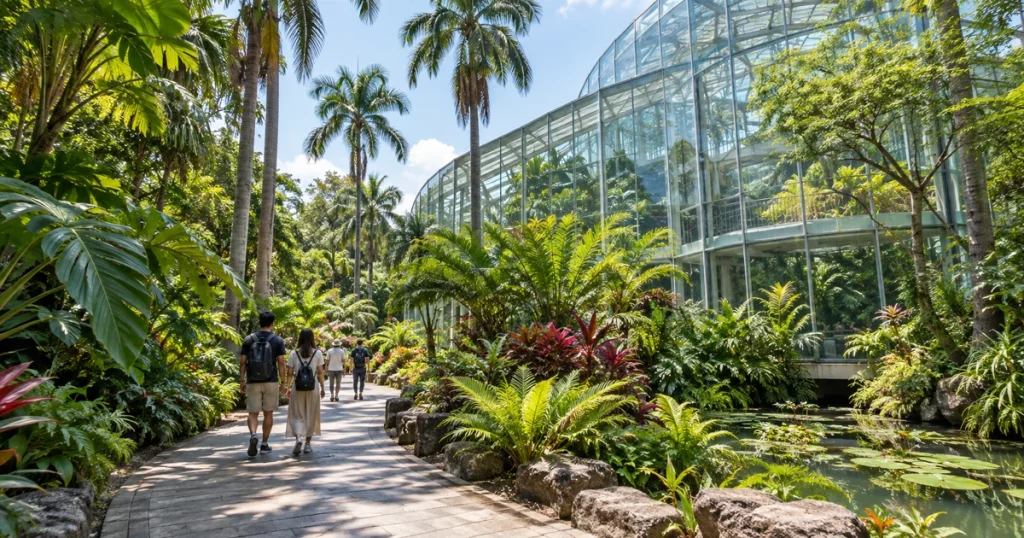
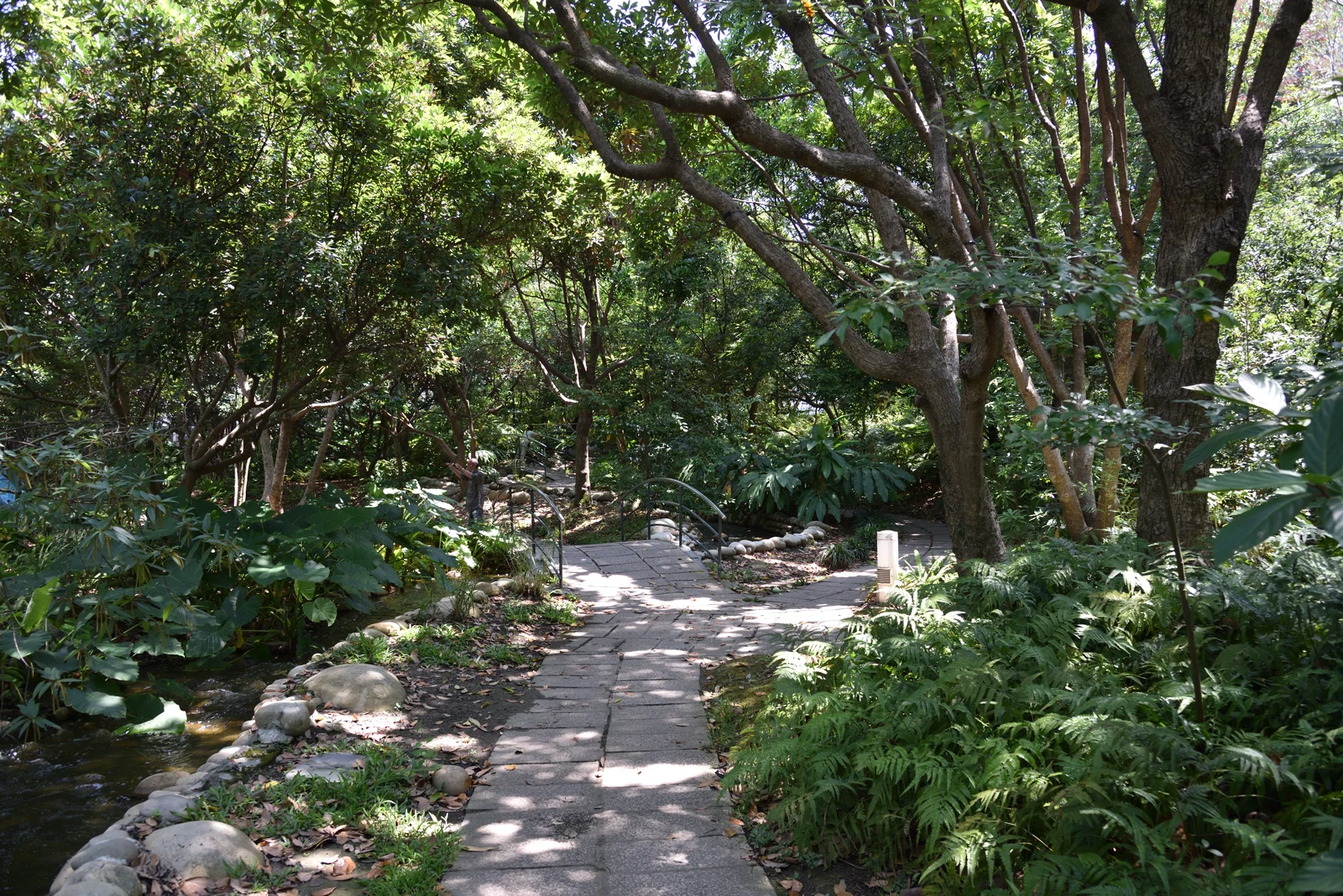
The botanical garden changes the pace from museum cases to living plants. Outdoor areas represent low-elevation Taiwanese habitats, while the greenhouse focuses on tropical rainforest plants. Count the walk to the garden and movement through outdoor space, especially in rain. Depending on weather and energy, use it as the second half of a full day or save it for a separate plant-focused visit.
Inside, look at large leaves, trunks, ferns and planting at different heights to understand how a rainforest uses space. Children can compare leaf shapes or notice climbing and growth toward light. Do not pick leaves, pull branches or reach into aquatic displays. Observation can be engaging without touching the living collections.
Half-day and full-day visit plans
For a first half day, allow roughly 3–4 hours for the Life Science Hall and either Human Cultures or Earth’s Treasures. This is a planning estimate, not a required pace. If children linger with dinosaurs, shorten the second section. An early start can end with lunch and a relaxed city afternoon; adding a film is optional, not necessary to justify the admission cost.
For a full day, visit the exhibition halls in the morning, take a real lunch break, then choose the Science Center or garden. If attending a theater, use the selected screening time as the anchor. Allow for walking, queues, toilets and finding seats rather than scheduling activities back to back. Groups with different interests can agree on meeting times while keeping children appropriately accompanied.
If continuing to Gaomei Wetlands, make the museum a focused short visit, check the wetlands’ access and sunset first, then work backward to a departure time. Separate days may work better. Use the Taichung transport guide or Taichung HSR-to-city guide to distinguish the different stations and connections.
Facilities, food, accessibility and photography
Start with the official floor and facilities map to locate service desks, lifts, accessible toilets, nursing rooms and water dispensers. Stroller and wheelchair users need a continuous workable route, not merely a building with a lift. Ask staff about detours around works, and leave bulky luggage at your accommodation when possible.
Eating and opened drinks are not allowed inside galleries and theaters; use designated dining areas. Plan a snack break for young children instead of waiting until they are hungry in a display hall. Short breaks, water and toilet stops help preserve interest through the second half of the visit.
Follow individual no-photography signs and screening rules. The museum requires separate arrangements for commercial or publication use of exhibit photographs; permission to take a personal photograph is not a commercial license. For a travel record, focus on your own party and exterior views without blocking paths or including people who do not want to be photographed.
If the museum anchors your Taichung stay, choose accommodation around practical transport, meals and the next day’s plans. The Taichung accommodation-area guide helps connect the museum day with the rest of the trip. Before leaving, recheck your ticket’s exact name, opening day, priority galleries and any screening time.
Frequently asked questions
How much is standard exhibition admission in 2026?
NT$120 for adults, covering the Life Science, Human Cultures and Global Environment halls. Other venues and paid special exhibitions have separate rules.
Where are the dinosaurs?
In the Life Science Hall, within the exhibition-halls ticket area.
Are the Science Center and greenhouse included?
Not automatically. Each costs NT$20 for a standard adult ticket; a selected package may include an add-on.
What is free on Friday afternoons?
The exhibition halls from 14:00 to 17:00 during 2026, excluding paid special exhibitions and theaters.
Is every Monday closed?
Normally, but announced national or substitute holidays are exceptions; October 26 is listed as open in 2026.
Is the preschool science area open in autumn 2026?
No. The fifth floor, including that area, has been listed as closed since September 1. Check for a reopening notice.
Are all areas free for children under six?
No. The halls, Science Center and greenhouse are free for them, but theaters have separate child tickets.
Can I see the whole complex in two hours?
Choose one or two priorities in two hours. Roughly 3–4 hours suits a first half day; multiple venues can fill a day.
Is the botanical garden entirely indoors?
No. It includes outdoor areas and an outdoor approach. Greenhouse and gallery tickets are different.
Can I snack inside galleries?
No. Food and opened drinks are prohibited in galleries and theaters; use designated dining areas.
Does a gallery ticket include any screening?
No. Check the exact theater, film, date and session when choosing a theater ticket.
Can I commercially publish exhibit photographs?
Personal photography permission is not a commercial-use license; the museum requires a separate application.